

"We don't rise to the occasion, we fall to the level of our systems." In the face of emergencies...
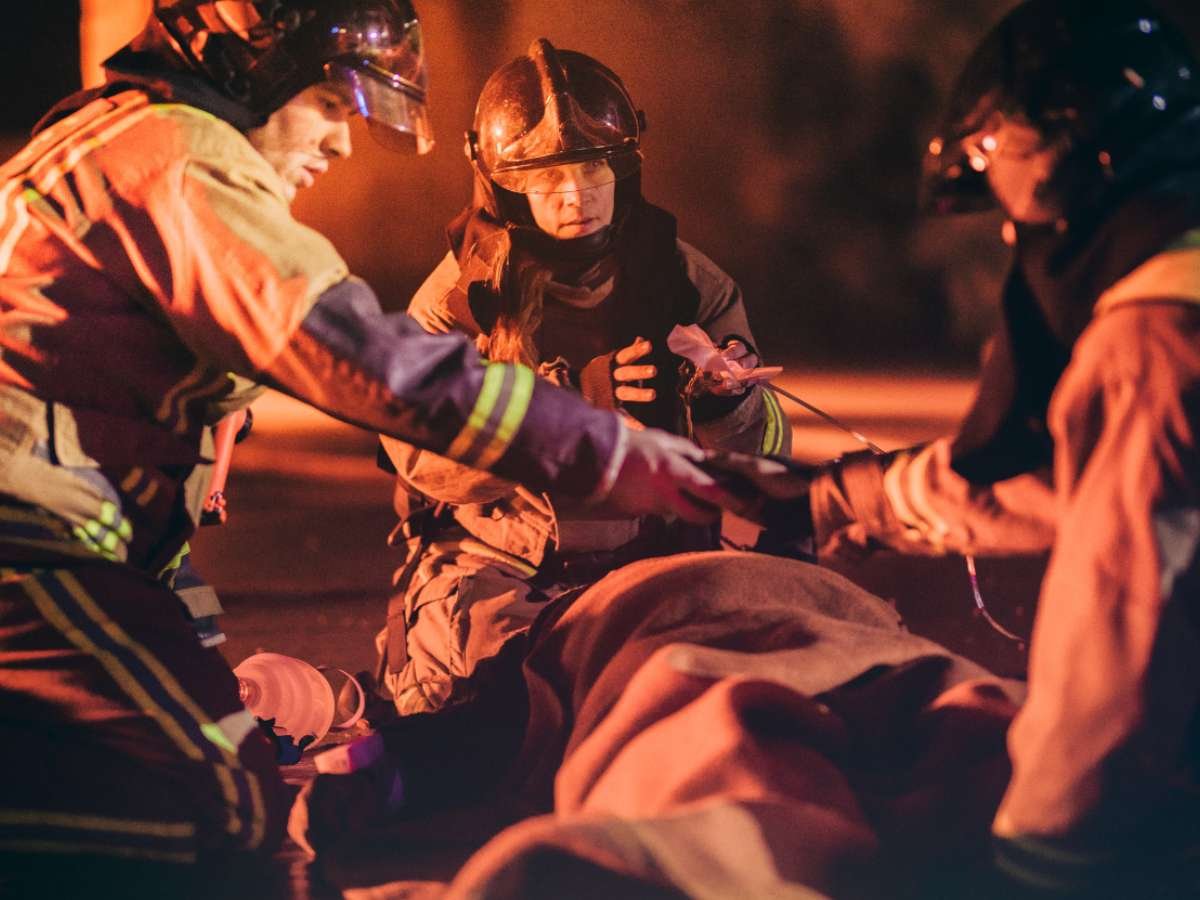
The purpose of rehab is to protect firefighters from overexertion and stress, but rehab also protects your agency from liability. Here are ten questions you need to ask about your firefighter rehab, and why you should ask them.
You don’t need to be perfect on all ten questions.
In fact, most departments aren’t.
This checklist is designed to expose system gaps, not individual failures. If you hesitate on even one question, that hesitation matters.
1. Is your rehab tracked and documented for each incident?
Rehab needs to be enforceable, otherwise firefighters won't want to go to rehab. In order to enforce attendance, you need reliable, accurate records of who came into rehab, what they did, and when/why they left.
The right system separates accountability information from the medical information so you can hand the accountability info to the chief or captain and ask, "Who was SUPPOSED to go to rehab but didn't?" and get help enforcing attendance. That way the chief doesn't have to see the PHI/HIPAA evaluation and screening data.
2. Do crews know when they should enter and exit rehab?
If it's not clear to firefighters when they need to report to rehab, they'll never go because they can claim, "I didn't know I was supposed to go." This starts during training, where rehab operations should absolutely be conducted. The gold standard is laid out by NFPA 1580, which you can find here. In short:
- Use of a single SCBA cylinder with intensive work
- After 40 minutes of intensive work without an SCBA
- Whenever firefighters want to go or are sent
Whatever your SOPs/SOGs state, you need to ensure they are clear and consistently enforced.
3. If you asked 10 firefighters to describe your rehab process, would their answers all sound the same?
Most agencies have ingredients for rehab (chairs, tables, fans, etc.), but no recipe. This question forces you to think about the system itself, the process for rehab, the recipe (how you use those ingredients). Chances are, what rehab looks like depends entirely on 1) WHO is on scene and 2) the size/duration of the incident.
If you have no process, firefighters won't know what to expect because rehab will look different every time. The goal should be to get firefighters to WANT to go to rehab, and they won't want to go if they don't know what to expect.
4. Have you updated your rehab system to be in compliance with NFPA 1580 (2025)?
Firefighters like to joke that NFPA stands for "Not For Practical Application," but the NFPA is the gold-standard and a way to protect your firefighters AND defend yourself from liability.
5. Do you have data showing how effective your rehab process actually is?
What gets measured gets managed, and that's no less true on a fire scene. You need accurate data to hold people accountable and to improve your process, but collecting data is challenging during an emergency situation. That's why your systems and paperwork matter!
WearARMR's app collects and organizes your data so you can review it and improve your process. No internet? No power? No problem: our paper PCRs are the Apple TV remote of PCRs. See all the critical information at a single glance (without clutter) so crews can document what matters and skip the unnecessary noise that slows rehab down.
6. Do firefighters want to go to rehab?
This is the holy grail of firefighter rehab, so much so that you're definitely thinking, "This isn't even possible." Many EMS providers are convinced it's the firefighters' own faults, but (while sometimes that's true) it's not the full picture. We've asked around and arrived at four key things your agency can do to make firefighters WANT to go to rehab. After all, WearARMR has a saying: rehab keeps firefighters fighting fires.
- Efficient - Getting them back into the fight requires speed without compromising medical standards. We need to get their vitals back to normal, replenish lost fluids and nutrients, screen for symptoms, evaluate them, and then discharge them without making mistakes. If your firefighters don't like going to rehab, maybe your system is the problem...
- Effective - Harping on about going to rehab doesn't help unless it's paired with highly effective rehab. If you're a firefighter being told to go to rehab but that "rehab" consists entirely of being handed a bottle of water, you'd definitely disregard the entire concept and importance of it.
- Educate - If you knew high-quality rehab could be responsible for you going home to your family at the end of the call, wouldn't you be more likely to go? When we were at FDIC 2025, we asked firefighters, "What's the #1 killer of firefighters?" The answer we got most often was, "cancer." Cancer is a problem there's no doubt about it, but that's something that'll kill you in 10 years, not 10 minutes like a heart attack. To be clear: overexertion and stress are the biggest cause of on-duty fatalities every year, and it's not even close.
- Enforce - Fight FOMO with FOMO. "Hey, so-and-so, you went into the building but I see here you didn't check into rehab after your bottle. You're on exterior at the next two fires because you're putting your own life, and therefore others' lives at risk. Go to rehab next time." It takes accurate records and guts, but you can hold firefighters accountable for going to rehab. That's why keeping accountability DURING the call is so important, so you know what you're seeing is right.
7. Can you trust your most junior EMT to run rehab?
If you can't, your system isn't good enough because it's relying on the people who are implementing it. "We'll always be there," is wrong, and you know it. You can't always trust that someone senior will be there because of black swans: just because it hasn't happened yet, doesn't mean it won't.
8. Does your rehab system work for any incident, regardless of size or duration?
You need a scalable, repeatable, modular system that can grow and shrink with ANY incident. Small house fire? Multi-agency brush fire? Multi-day natural disaster recovery? Your rehab system should work on any of them. That's the beauty of the WearARMR system: it relies on ROLES not PEOPLE. The job gets passed from person to person; since the system is so simple to understand and we provide training with our kits, transferring care is easy. So is setting up or moving active rehab areas.
9. Are you confident that your current approach to rehab would hold up in an injury or fatality investigation?
And now we're at the gut punch.
Just because nothing bad has happened before, doesn't mean it won't in the future. Hope is not a system.
Liability is real, and so is explaining to the relative of a dead firefighter that you didn't have an effective rehab system in place because... Why? What reason is good enough? You want to defend that decision in a court of law?
10. If one of your crew collapsed post-incident, could you prove rehab was done correctly?
How could you, without a doubt, PROVE that rehab was done properly? With proper training, record-keeping, and systems that align with national guidelines. With WearARMR.
If you hesitated on any of these questions, the next step isn't blame. It's understanding what "Yes" actually looks like.